
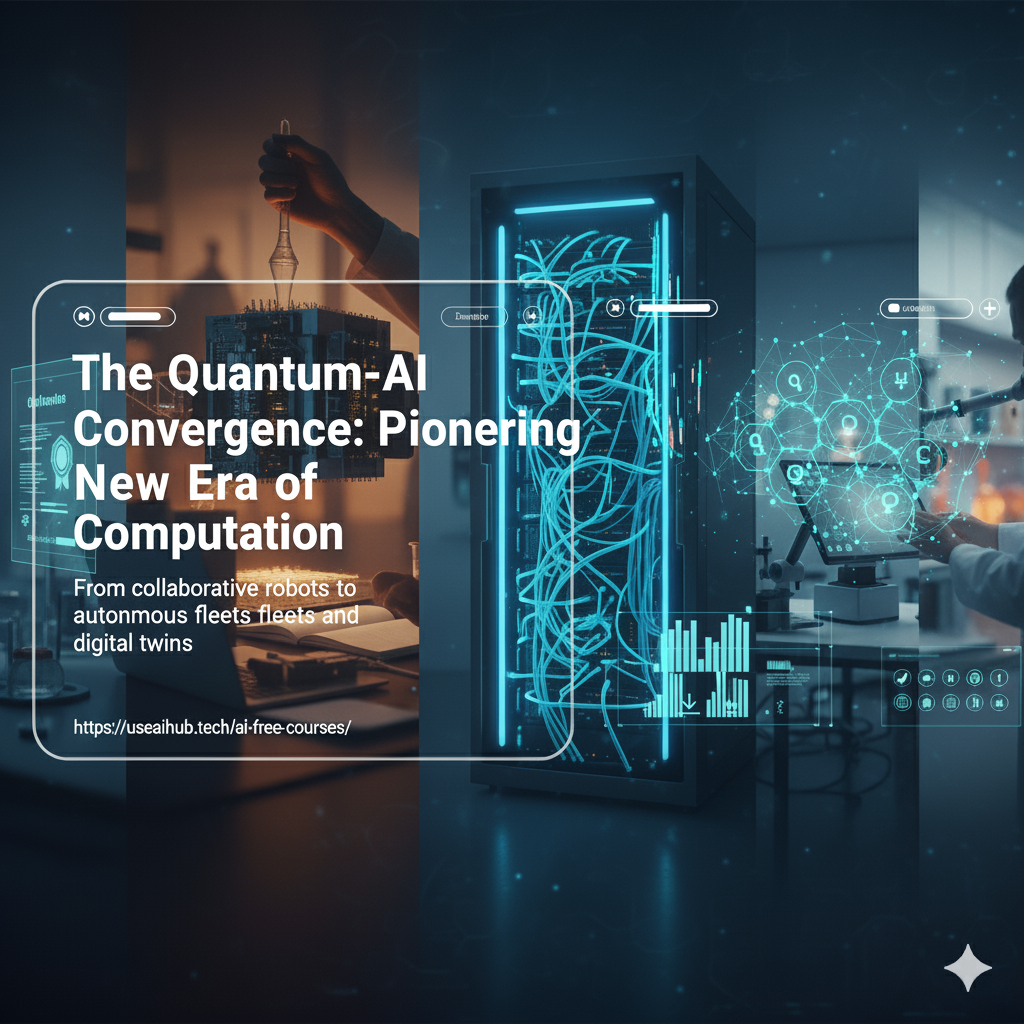
Understanding Quantum Computing and Artificial Intelligence
Quantum computing and artificial intelligence (AI) represent two of the most transformative technologies in modern computation. Quantum computing leverages the principles of quantum mechanics, which govern the behavior of subatomic particles. The fundamental unit of quantum information is the qubit, which can exist simultaneously in multiple states, enabling quantum computers to process vast amounts of data and perform complex calculations at unprecedented speeds. This contrasts with classical computing, where bits represent either a 0 or a 1, restricting the computational capacity of classical systems.
On the other hand, artificial intelligence involves creating algorithms that enable machines to learn from data and make decisions based on that data. AI technologies, including machine learning and deep learning, operate on classical architectures. They excel at recognizing patterns, making predictions, and automating tasks, but they face limitations in processing high-dimensional data efficiently and addressing specific combinatorial problems typically encountered in diverse fields.
Historically, the evolution of quantum computing can be traced back to the 1980s when, notably, Richard Feynman and David Deutsch proposed concepts that blended quantum physics with computational theory. Simultaneously, AI has undergone several phases of development since its inception in the 1950s, marked by both fervent enthusiasm and significant challenges. As both fields advanced, interest grew in their intersection, driven by the potential to combine the computational prowess of quantum systems with the adaptive intelligence of AI.
The impetus for merging quantum computing and artificial intelligence lies in their complementary strengths. Quantum computers can efficiently tackle problems that involve large datasets and complex variables, such as optimization and simulation tasks. These are specific challenges that classical systems, as well as conventional AI, struggle to manage. Thus, exploring the convergence of quantum computing and AI at www.useaihub.tech could pave the way for groundbreaking advancements in computational capabilities.
The Impending Inflection Point: What to Expect by 2026
The convergence of quantum computing and artificial intelligence (AI) is on the cusp of a significant transformation set to unfold by 2026. This anticipated inflection point is expected to witness the operationalization of hybrid quantum-classical AI systems, enabling researchers and industries to utilize practical quantum advantages. Key advancements in quantum algorithms and improvements in quantum hardware will be essential to facilitate this integration.
One of the most critical components in achieving this convergence will be advancements in quantum algorithms. Researchers are actively exploring new algorithms that could leverage quantum superposition and entanglement to process data more efficiently than traditional algorithms. These innovations are anticipated to significantly enhance machine learning models, allowing AI systems to solve complex problems that are currently beyond the reach of classical computation.
Furthermore, the evolution of quantum hardware plays a pivotal role in this transition. With ongoing developments in quantum processors and error-correction techniques, the performance and stability of quantum machines are expected to improve drastically. This progress will enhance the feasibility of implementing quantum solutions in real-world applications, bridging the gap between theoretical possibilities and practical implementation. Industries such as pharmaceuticals, finance, and logistics stand to benefit immensely from these advancements, as they will enable the analysis of vast data sets at unprecedented speeds.
However, the journey towards this quantum-AI convergence is not without challenges. Significant barriers, including the need for specialized knowledge, software compatibility issues, and high operational costs, must be addressed. Overcoming these hurdles will require collaborative efforts among academia, industry leaders, and governments to ensure a smooth transition. As this field evolves, the implications for global industries and society as a whole could be profound, heralding a new era of computational capabilities.
Applications and Breakthroughs: Transforming Industries
The convergence of quantum computing and artificial intelligence (AI) is set to revolutionize various industries by unlocking unprecedented capabilities and efficiencies. One of the most promising areas is hyper-personalization in consumer services. By harnessing the processing power of quantum computers, businesses can analyze vast amounts of data at remarkably high speeds, enabling them to tailor individual customer experiences with exceptional accuracy. Companies can shift from generic marketing strategies to highly personalized recommendations, thereby improving customer satisfaction and loyalty.
In the financial sector, ultra-fast predictive analytics stands to reshape risk management and trading strategies. Quantum computing can process complex algorithms and vast datasets essentially in real time. Financial institutions will be able to evaluate multiple market scenarios and adjust their investments accordingly, thereby maximizing profits while minimizing risks. The potential for quantum-powered predictive analytics makes it an invaluable tool for decision-making in high-stakes environments.
Furthermore, advancements in materials science present another exciting application of this technological convergence. Quantum AI can facilitate the discovery of new materials with unique properties, which is crucial for various industries, including pharmaceuticals, energy, and manufacturing. By simulating molecular interactions and predicting material behavior, researchers can significantly accelerate the development of innovative products, from more efficient batteries to advanced drugs.
Additionally, as we venture into an increasingly digital world, the need for robust cybersecurity measures has never been higher. Here, post-quantum cryptography (PQC) emerges as a vital solution. By employing the principles of quantum mechanics, PQC aims to create encryption methods that are virtually unhackable, ensuring the security of sensitive data against future threats. Organizations implementing PQC could redefine cybersecurity protocols, offering enhanced protection to businesses and consumers alike.
These breakthroughs herald a new era of technological advancement, where quantum and AI converge to transform industries and redefine the landscape of global commerce and security.
Challenges and Ethical Considerations in Quantum-AI Integration
The convergence of quantum computing and artificial intelligence (AI) heralds significant advancements in computational capabilities; however, it also introduces a range of challenges and ethical considerations that must be carefully examined. One crucial aspect is data privacy. As quantum-AI systems process vast amounts of data with unprecedented speed, concerns about the protection of personal and sensitive information grow. The potential for unauthorized access and exploitation becomes a pressing issue, necessitating robust security frameworks to safeguard data integrity.
Another prominent challenge lies in ensuring fairness in algorithmic decision-making processes. Quantum-AI systems, if not designed with ethical considerations in mind, risk perpetuating existing biases or even introducing new ones. The implications of deploying biased algorithms are profound, potentially leading to unfair outcomes in areas such as finance, healthcare, and criminal justice. It becomes imperative to develop methods for auditing and validating these algorithms to ensure they function equitably and do not discriminate against certain groups.
Furthermore, the misuse of advanced technologies poses a significant ethical dilemma. The capabilities afforded by quantum-AI integration could be harnessed for malicious purposes, ranging from cyberattacks to the manipulation of critical information. This calls for an ongoing dialogue among stakeholders—including technologists, ethicists, and policymakers—to establish regulatory frameworks that prevent harmful applications while promoting beneficial innovations.
The societal impacts of implementing quantum-AI systems warrant careful consideration as well. These technologies hold the potential to reshape industries, create economic disparities, and influence labor markets. Therefore, a responsible approach to development is essential, emphasizing transparency and inclusivity. By fostering a culture of ethical responsibility within the tech community, the challenges posed by quantum-AI integration can be addressed, ensuring that advancements benefit society as a whole.