
The Rise of Human-AI Collaboration in the Workplace
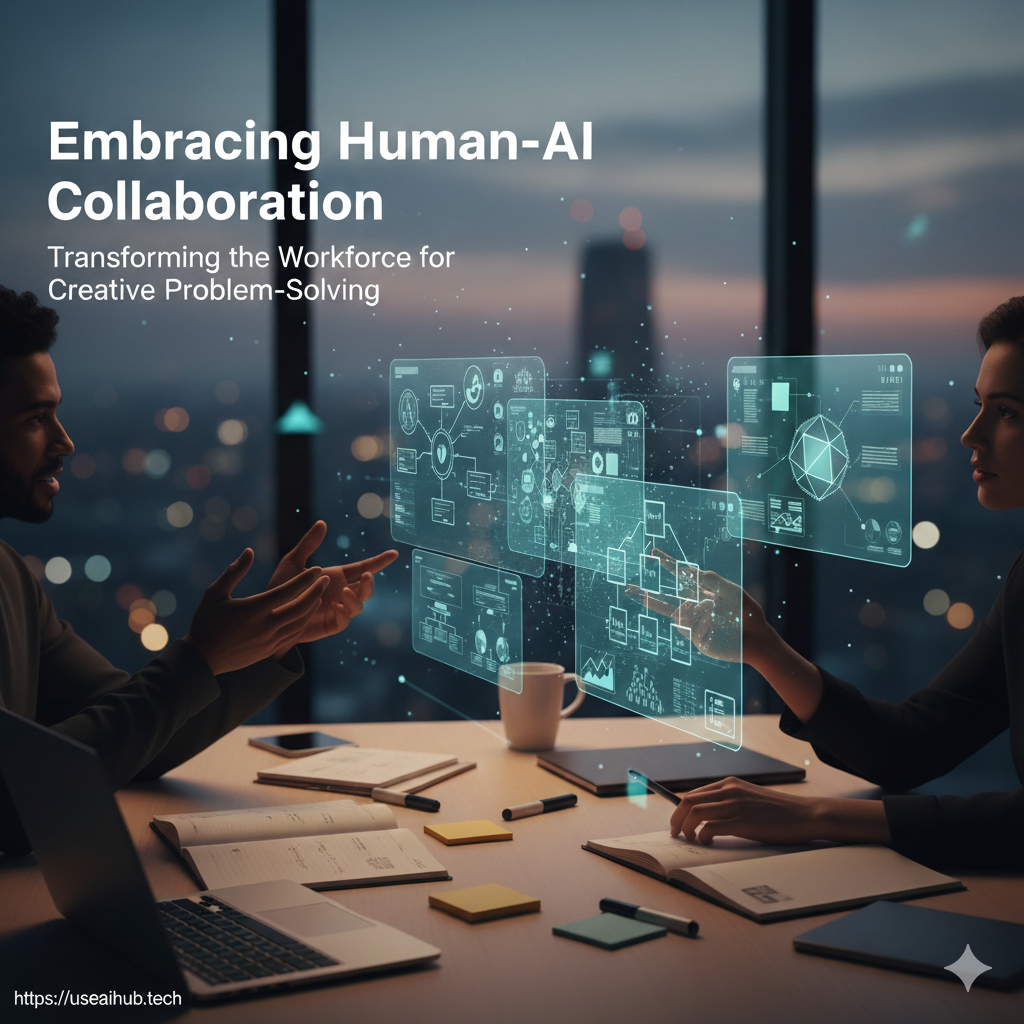
In recent years, the concept of human-AI collaboration has gained significant traction in professional settings. Unlike traditional automation, which often seeks to minimize human involvement, human-AI collaboration focuses on leveraging the unique strengths of both technology and human intelligence. This approach enables employees to harness the power of artificial intelligence to complement their skills rather than replace them. As businesses increasingly recognize the potential of AI technologies, the way work is structured and executed has evolved dramatically.
AI’s evolving role in the workplace is particularly evident in its ability to handle repetitive and mundane tasks. By automating these routine functions, AI allows human workers to redirect their focus toward more meaningful and creative endeavors. For instance, in sectors such as manufacturing and customer service, AI-driven systems can perform data entry, schedule management, and even initial customer inquiries. This not only increases operational efficiency but also cultivates an environment where employees can dedicate more time to strategic thinking and complex problem-solving.
The benefits of human-AI collaboration extend beyond mere efficiency gains. As employees engage in more stimulating tasks, job satisfaction tends to increase. This newfound ability to tackle more creative and impactful projects can lead to greater motivation and a sense of fulfillment among the workforce. Furthermore, organizations that effectively embrace AI collaboration often experience improved employee retention rates, as a more engaging and innovative work environment fosters loyalty and commitment.
Ultimately, human-AI collaboration represents a transformational shift in workforce dynamics. Companies prioritizing this collaboration are not just investing in technology but cultivating a culture that values human contributions alongside advanced AI capabilities. By doing so, they position themselves at the forefront of innovation and adaptability in an increasingly competitive marketplace.
Shifting Workforce Focus to Creativity and Strategy
The integration of Artificial Intelligence (AI) into various job functions is reshaping the workforce, allowing employees to move away from routine, repetitive tasks towards more complex and creative endeavors. This shift is crucial as organizations strive to remain competitive in an era marked by rapid technological advancement. By leveraging AI technologies, businesses can streamline operations, reduce mundane workloads, and free up valuable human resources for higher-order thinking tasks, thereby fostering an environment rich in creativity and strategy.
As companies adopt these innovations, the emphasis on creativity becomes more pronounced. For instance, firms like Google have employed AI-driven tools to automate data analysis, enabling their teams to focus on innovative project development and less on time-consuming tasks. This transition not only enhances productivity but also encourages employees to engage in strategic problem-solving—an essential skill in today’s complex business landscape. The dynamic between human and AI capabilities creates a unique synergy that can lead to groundbreaking solutions and more effective decision-making processes.
Additionally, organizations are witnessing significant improvements in collaboration when AI is utilized effectively. Teams powered by AI can analyze vast amounts of data quickly, derive insights, and generate creative solutions, ultimately transforming how they approach challenges. For example, IBM has successfully integrated AI with its workforce, leading to the creation of AI tools that assist employees in brainstorming sessions, fostering a culture of innovation. The combination of human creativity and AI’s data processing capabilities presents opportunities for businesses to explore alternative strategies that were previously unattainable.
In conclusion, the transition towards creativity and strategic focus within the workforce, driven by AI integration, not only enhances productivity but also nurtures innovation. Embracing this collaboration enables organizations to harness the full potential of their human resources while leveraging AI’s strengths to create impactful solutions in a rapidly evolving landscape.
The Emergence of New Roles in the AI Landscape
As artificial intelligence (AI) technologies advance, they are fundamentally reshaping the workforce, leading to the creation of novel job roles that were previously unimaginable. One such role is that of an AI auditor, a professional tasked with ensuring that AI systems function ethically and effectively. These auditors play a critical role in scrutinizing AI algorithms to identify biases, validate data integrity, and confirm that the systems comply with legal and regulatory standards. The demand for AI auditors is expected to rise as organizations increasingly rely on AI solutions, making it imperative for professionals to acquire skills in ethical analysis, data science, and compliance auditing.
Another emerging position is that of a prompt engineer, a specialist responsible for crafting and refining the prompts that guide AI systems in producing relevant outputs. This role requires a deep understanding of both human language and AI capabilities, demanding excellent communication skills and familiarity with natural language processing techniques. Prompt engineers focus on optimizing prompts to achieve desired results, enhancing the interaction between humans and AI while driving efficiency in creative problem-solving processes.
The evolution of these roles underscores the importance of continuous training and professional development within the rapidly changing job landscape influenced by AI technologies. Organizations are encouraged to invest in upskilling their workforce, equipping employees with the necessary competencies to thrive in an AI-centric environment. Upskilling efforts should focus on critical thinking, data literacy, and adaptive learning, allowing the workforce to harness AI effectively while also ensuring ethical practices. As AI permeates various industries, the emphasis on creating new skills and roles will enable individuals to navigate this transformative phase in the job market while fostering a collaborative relationship between humans and AI.
Preparing for the Future: Strategies for Organizations
As organizations strive to thrive in an era defined by rapid technological advancements, adopting effective strategies for human-AI collaboration becomes imperative. One of the foremost steps in this journey is fostering a culture of innovation. Companies should encourage an environment where employees feel safe to experiment, share ideas, and collaborate with AI systems. This requires management to support risk-taking and celebrate successes, no matter how small, in using AI to solve complex problems creatively.
Investing in employee training is another critical strategy for successful human-AI collaboration. AI technologies require workers to possess new skill sets that may not have been relevant a few years ago. Organizations should consider tailored training programs that equip employees with the expertise needed to work alongside AI. This may include courses on data analysis, machine learning fundamentals, or ethical AI practices. By empowering employees with the necessary skills, organizations can ensure that their workforce is prepared to leverage AI solutions effectively.
Moreover, ethical considerations must be prioritized during AI adoption. Organizations should implement guidelines that address potential biases, data privacy, and responsible AI usage. Ethics training ensures that employees are aware of the implications of their decisions when utilizing AI tools, fostering a responsible approach to technology. Furthermore, establishing a cross-disciplinary team comprising ethicists, technologists, and business leaders can reinforce the importance of ethical guidelines in everyday operations.
In conclusion, organizations seeking to implement human-AI collaboration must focus on nurturing innovation, investing in employee skills, and addressing ethical concerns. To further enhance your understanding and implementation strategies regarding AI collaboration, consider exploring additional resources at https://useaihub.tech/. By adopting these strategies, organizations can not only integrate AI solutions effectively but also prepare for an evolving workforce landscape.