
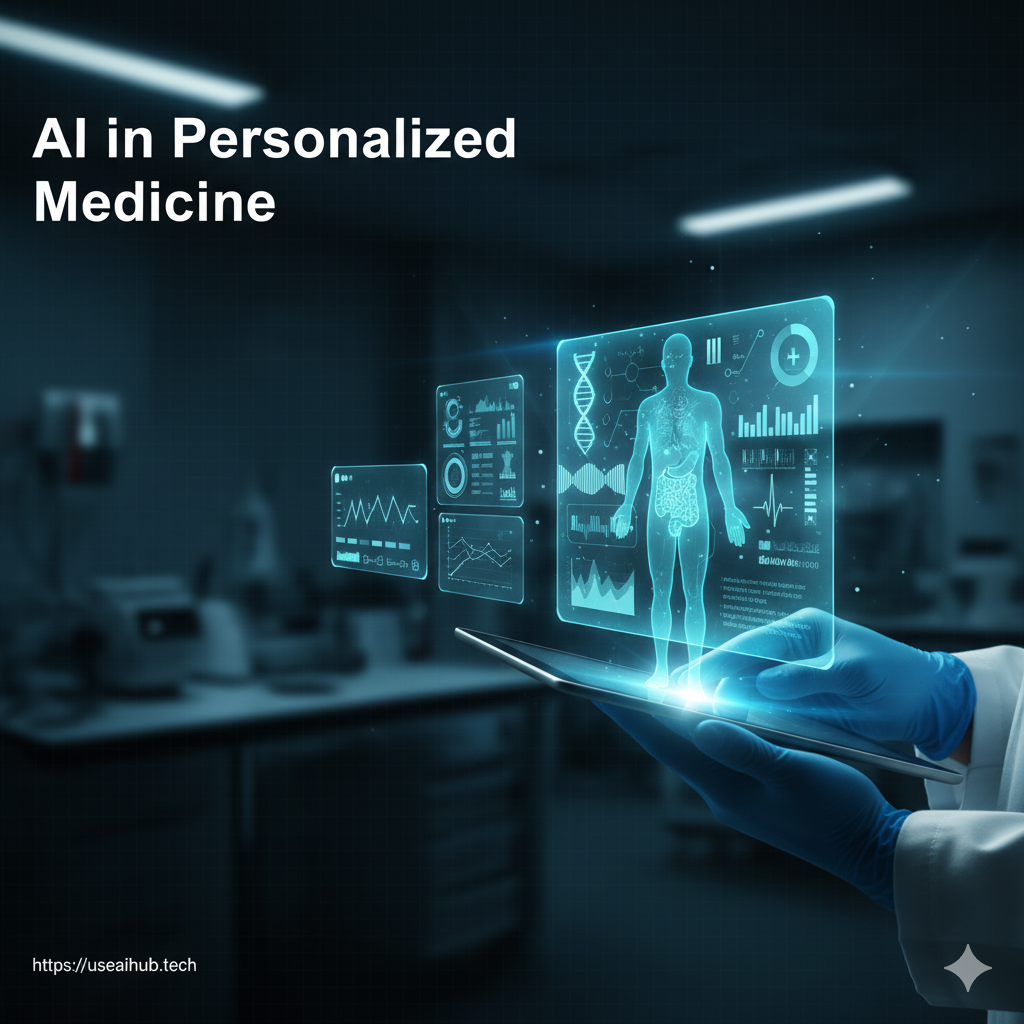
Introduction to Personalized Medicine and AI
Personalized medicine represents a significant shift in the way healthcare is delivered, focusing on tailoring treatment and prevention strategies to individual characteristics, including genetics, lifestyle, and environmental factors. Traditionally, medical practices have often adopted a one-size-fits-all approach, applying generalized treatments that may not account for the unique attributes of every patient. This model of care, while effective in some instances, has its limitations in addressing complex and varied patient needs.
The rise of personalized medicine is largely attributed to advances in genomics and biotechnology. These innovations enable a more nuanced understanding of diseases at a molecular level, paving the way for targeted therapies that enhance treatment efficacy and reduce adverse effects. In this evolving landscape, artificial intelligence (AI) emerges as a transformative tool that enhances the capabilities of personalized medicine.
AI technologies have evolved from being supplementary tools in medicine that primarily assist in diagnosis to becoming central players in the proactive management of health. By analyzing vast amounts of data, AI can recognize patterns and correlations that may not be immediately apparent to healthcare professionals. This ability allows for improved predictive modeling, which is essential for identifying individuals at risk of developing specific conditions before they manifest clinically.
Moreover, AI-driven algorithms can process genetic data, electronic health records, and lifestyle information to formulate personalized health profiles. These profiles enable clinicians to devise prevention strategies that are unique to each patient, significantly improving the potential for successful health outcomes. As such, the role of AI in personalized medicine underscores its potential in not only revolutionizing treatment protocols but also enhancing disease prevention efforts, thus transforming the future of healthcare delivery.
The Mechanisms of AI in Disease Prediction
Artificial Intelligence (AI) is revolutionizing the field of personalized medicine by employing sophisticated algorithms to analyze vast amounts of data, ultimately facilitating accurate disease prediction. At the core of this technological advancement is the integration of genomics, lifestyle factors, and individual medical history, which collectively enhance the assessment of disease risk. AI algorithms specifically utilize machine learning techniques to improve their predictive capabilities as they process more information over time.
One primary mechanism involves the analysis of genetic sequences, where AI examines variations in DNA that can indicate susceptibility to certain diseases. For example, genomic data may uncover specific mutations associated with increased risk for hereditary conditions such as breast or colorectal cancer. By synthesizing this data with lifestyle factors—such as diet, exercise, and smoking habits—AI can create detailed profiles that highlight potential health issues unique to each individual.
Furthermore, historical medical records serve as a crucial data source. AI algorithms can sift through patient histories to identify patterns and trends correlating with various diseases. For instance, if a patient exhibits symptoms reminiscent of a specific condition that has commonly appeared in similar patient profiles, the AI can flag this risk, prompting early intervention. Such predictive models not only amalgamate different data types but also employ advanced techniques, such as deep learning, which refine their accuracy as they learn from new data inputs.
This synthesis of diverse data sources enables AI to generate personalized risk assessments, thereby allowing healthcare providers to devise tailored prevention strategies. The continuous learning aspect of these algorithms signifies their ability to adapt and enhance accuracy, making AI an invaluable asset in the domain of disease prediction. By leveraging computational power to analyze multifaceted data, AI stands at the forefront of evolving personalized medicine, with the potential to significantly impact health outcomes.
Benefits of AI-Driven Personalized Prevention
The integration of artificial intelligence (AI) into personalized medicine is transforming the healthcare landscape, particularly in the area of disease prevention. AI-driven approaches facilitate early detection of health conditions, enabling healthcare providers to implement preventive measures before symptoms manifest. By analyzing vast amounts of patient data—from genetic information to lifestyle habits—AI systems can identify patterns and risk factors, providing insights that were previously unattainable with traditional methods.
Targeted prevention strategies stand out as one of the most significant benefits of AI in personalized medicine. Through predictive analytics, AI can determine which individuals are at elevated risk for specific diseases and suggest tailored interventions. For instance, AI algorithms can process genomic data alongside environmental and behavioral data to personalize recommendations for disease prevention, ranging from lifestyle modifications to early screening protocols. This personalized approach enhances the efficacy of preventive measures, as they are finely tuned to the unique characteristics of each patient.
Furthermore, shifting the focus from treatment to prevention not only improves individual health outcomes but also has broader implications for the healthcare system. By mitigating the onset of diseases, AI-driven personalized prevention can significantly reduce healthcare costs associated with advanced treatment and chronic disease management. Case studies from various healthcare settings illustrate these benefits; for example, AI applications have successfully predicted the risk of conditions like diabetes and cardiovascular diseases, leading to timely interventions that decrease incidence rates.
In addition to lowering costs, prioritizing prevention through AI enhances the overall quality of life for individuals. With proactive health management, patients can maintain better health and vitality, ultimately leading to increased productivity and well-being. As AI continues to evolve, its role in personalized medicine will undoubtedly expand, paving the way for a future where prevention is prioritized and personalized, making a significant impact on global health outcomes.
Challenges and Ethical Considerations
The integration of artificial intelligence (AI) into personalized medicine presents various challenges and raises significant ethical concerns. A primary issue is data privacy, as personalized medicine relies heavily on large datasets that include sensitive health information. The collection, storage, and utilization of patient data necessitate robust security measures to prevent unauthorized access and breaches. As healthcare organizations adopt AI solutions, ensuring that patient data is handled according to stringent privacy standards becomes essential to maintaining trust.
Another critical challenge is potential biases in AI algorithms. These biases can stem from the training data used to develop AI systems, often reflecting existing disparities in healthcare access and treatment. If AI tools are trained on unrepresentative datasets, they may produce inequitable outcomes, inadvertently perpetuating health inequalities rather than alleviating them. Consequently, it is imperative for developers to rigorously evaluate their algorithms for fairness and accuracy to serve all demographic groups effectively.
The need for regulatory frameworks is also a pressing concern. Currently, there is a lack of comprehensive regulations governing the use of AI in personalized medicine, leading to variations in quality and safety across different implementations. Developing clear guidelines can help ensure that AI applications adhere to ethical standards while promoting transparency and accountability. This regulatory environment will not only protect patients but also enhance the credibility of AI solutions in healthcare.
As these challenges persist, they will significantly impact patient trust and the overall effectiveness of AI in disease prevention. Addressing ethical considerations proactively is critical for fostering an environment where AI can be leveraged responsibly, ultimately improving patient outcomes and advancing personalized medicine.